Posts

Showing posts with the label Germany

Neuschwanstein Castle, Germany

Image
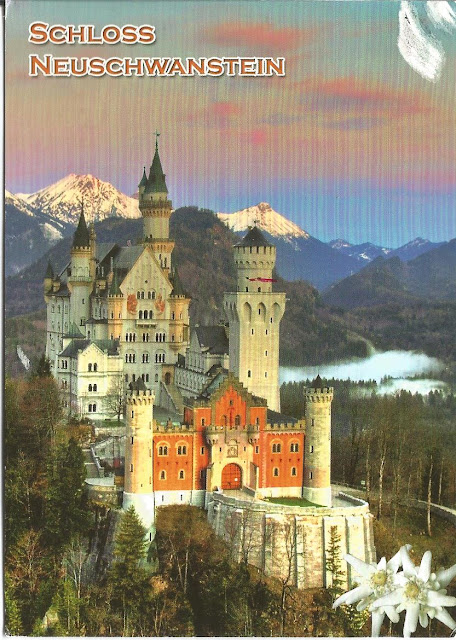
  Today Neuschwanstein is one of the most popular of all the palaces and castles in Europe. Every year  1.4 million people visit "the castle of the fairy-tale king". In the summer around 6,000 visitors a day stream through rooms that were intended for a single inhabitant.

Würzburg, Germany

Image
Würzburg is a city in Germany's Bavaria region. It's known for lavish baroque and rococo architecture, particularly the 18th-century Residenz palace, with ornate rooms, a huge fresco by Venetian artist Tiepolo and an elaborate staircase.

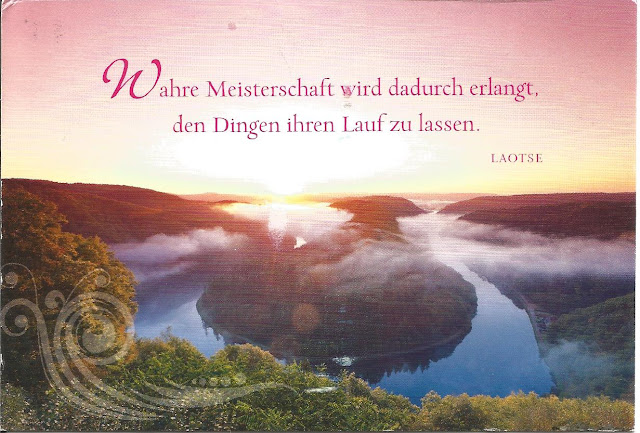
Saarland, Germany

Image
Saarland is a forested, southwestern German state bordered by France and Luxembourg. Named after the Saar River, a tributary of the Moselle, Saarland is considered part of the greater Moselle wine region.

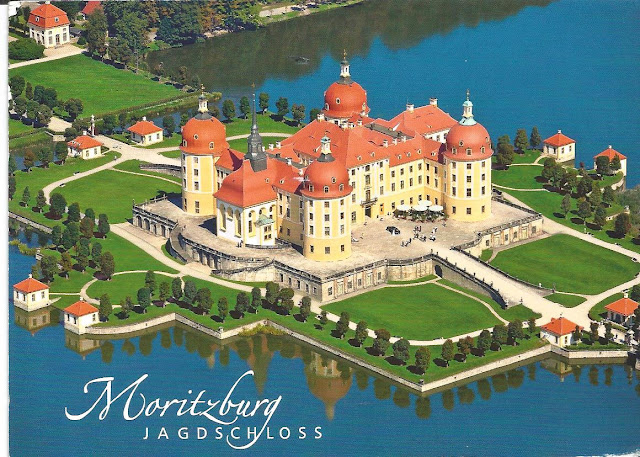
Moritzburg Castle

Image
Moritzburg Castle is a Baroque palace in Moritzburg, in the German state of Saxony, about 13 kilometres northwest of the Saxon capital, Dresden. The castle has four round towers and lies on a symmetrical artificial island.

Disney Castle - Schloss Neuschwanstein

Image
The Neuschwanstein Castle looks like a fairytale castle. Neuschwanstein is a castle of the paradox, it was built in the 19th century in Bavaria, in a time when castles no longer had strategical and defensive purposes. This fairytale look of the Neuschwanstein castle inspired Walt Disney to create the Magic Kingdom. Today, Neuschwanstein is the most visited castle in Germany, and one of the most popular tourist destination in the world. Every year over 1.300.000 people cross its gate.

Traditional Clothes of Black Forest Region

Image
The Bollenhut is a ladies' hat topped with pom-poms and has been part of the traditional costume worn by women in the three neighbouring Black Forest villages of Gutach, Kirnbach (near Wolfach) and Reichenbach (near Hornberg) since around 1750. Young unmarried girls wear hats with red "pompoms" and married women hats with black ones.

Germany

Image

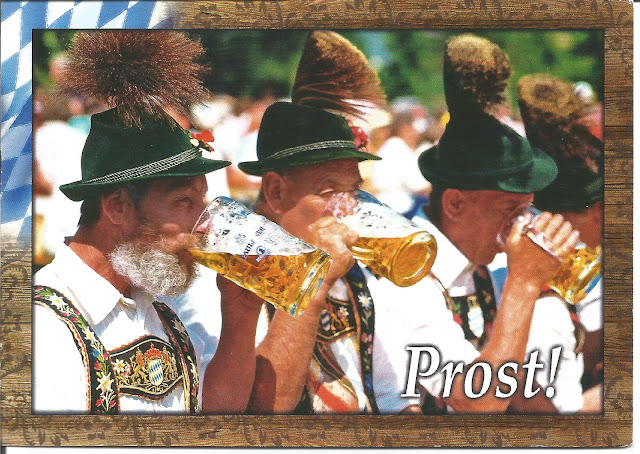
'Prost!', Germany

Image
  In german, Prost means "Cheers", as a salutation accompanied by beer. Beer is a major part of German culture. .

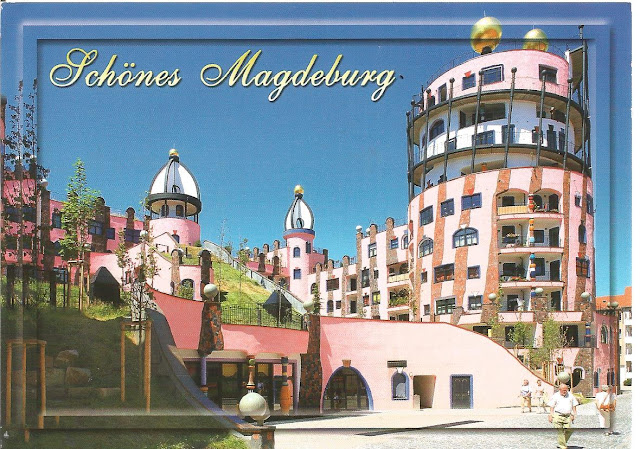
Magdeburg, Germany

Image
  Magdeburg is the capital city and the second largest city of the state of Saxony-Anhalt, Germany. Magdeburg is situated on the Elbe River and was one of the most important medieval cities of Europe,

Largest Cuckoo Clock

Image
In the   the world’s largest cuckoo clock , found in Triberg, Germany, the cuckoo bird alone is 14 feet long and weighs 330 pounds. The whole thing is based on a much smaller cuckoo clock that is about 100 years old—the Triberg clock is simply scaled up. By sixty times.   Following the ancient traditions of the cuckoo clocks, they are still made in Triberg.  

Saxon Switzerland National Park

Image
 Despite the name Saxon Switzerland National Park is in German near the city Dresden. Bizarre stone formations and spectacular views are only a few of the wonderful characteristics of this region.

Wernigerode Castle

Image
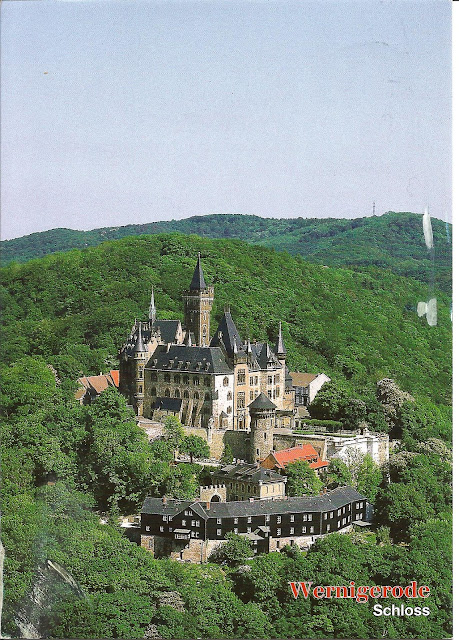
This 12th century Romanesque-style castle was originally used as a hunting lodge for the old emperors of Germany. Wernigerode Castle has had an identity crisis of architectural styles during its long history. In the 15th century, large arched windows showed off its Neo-Gothic flair. By the 16th century, Schloss Wernigerode had morphed into a Renaissance fortress, until the ravages of the Thirty Years’ War damaged much of it. In the 18th century, Schloss Wernigerode was trying on another architectural style, this time as a Baroque masterpiece.What we see today is an elegant smorgasbord of architectural designs. The castle has been open to visitors since 1930.

Marie Louise Stolln

Image
Germany was once a cluster of small kingdoms, duchies and principalities – which were unified as the kingdom of Prussia in 1871. Later it became the Weimer Republic, the Third Reich (National Socialism), and in 1949 the nation divided into the Soviet-supported East Germany (German Democratic Republic) and the democratic West Germany (Federal Republic of Germany). On October 3rd 1990, East and West were reunited. German remains the language with the most native speakers in Europe – besides Germany having the largest population in the EU, the German language was once the lingua franca of central, eastern and northern Europe. Germany's capital centre has shifted around the country – these cities have all at one time or another been capitals of Germany: Aachen, Regensburg, Frankfurt-am-Main, Nuremberg, Berlin, Weimar, Bonn (and East Berlin), and, since 1990, Berlin again. Germany shares borders with nine other countries – Denmark, Poland, the Czech Republic, Austr...
Bavaria

Image
Bavaria, home to 12.5 million inhabitants , is located in the southeast of Germany and is the largest of the 16 federal states of Germany. Bavaria covers almost one-fifth of the total land area of Germany and has an area of 70,548 square kilometers (27,200 squaremiles). The capital city of Bavaria is Munich (München). The two major rivers that flow through Bavaria are the Danube (Donau) and the Main . The Bavarian Alps are home to Germany's highest peak, the Zugspitze 2,962 meters / 9,717 feet, and form a natural border with Austria. The landscape of Bavaria can be subdivided into four major regions: the Alps, with the Zugspitze, the highest mountain in Germany at 2,962 meters; the Alpine foothills with their numerous lakes; the Eastern Bavarian central mountains with the first ever national park in Germany; the Swabian-Franconian cuesta landscape. Bavaria was the first ever region in Europe to be precisely measured. Nature conservation and environm...

Brandenburg Gate

Image
     The Brandenburg Gate is an 18th-century neoclassical triumphal arch in Berlin, one of the best-known landmarks of Germany. The gate is the monumental entry to Unter den Linden, the renowned boulevard of linden trees, which formerly led directly to the city palace of the Prussian monarchs. It was commissioned by King Frederick William II of Prussia as a sign of peace and built by Carl Gotthard Langhans from 1788 to 1791. Having suffered considerable damage in World War II, the Brandenburg Gate was fully restored from 2000 to 2002 by the Berlin Monument Conservation Foundation During the post-war Partition of Germany, the gate was isolated and inaccessible immediately next to the Berlin Wall, and the area around the gate was featured most prominently in the media coverage of the opening of the wall in 1989. Throughout its existence, the Brandenburg Gate was often a site for major historical events and is today considered a symbol of the tumultuous h...