Posts

Showing posts with the label Poland

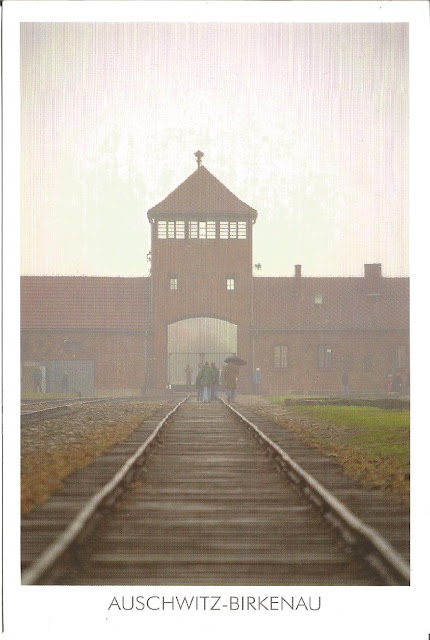
Auschwitz concentration camp

Image
German forces occupying Poland set up Auschwitz in 1940 as a labour camp for Polish prisoners, gradually expanding it into a vast labour and death camp. Between 1.2-1.5 million people died at the camps, of whom about 1 million were Jewish.  Other groups of people who died included Polish political prisoners, Soviet prisoners of war, Gypsies, homosexuals, people with disabilities and prisoners of conscience or religious faith.

Tatra Mountains

Image
Tatra Mountains are a mountain range that form a natural border between Slovakia and Poland. They are the highest mountain range in the Carpathian Mountains.

Malbork Castle

Image
The Castle of the Teutonic Order in Malbork is the largest castle in the world by surface area.It was built in Marienburg, Prussia (now Malbork) by the Teutonic Knights, a German Roman Catholic religious order of crusaders, in a form of an Ordensburg fortress. The Order named it Marienburg (Mary's Castle). The town which grew around it was also named Marienburg.

Gdansk

Image
 One of Poland’s most beautiful cities, Gdansk, on the Baltic Sea, has played major roles in history, especially in the 20th-century. It was the 1939 flash point of World War II, and then in 1980, the birthplace of the Solidarnosc labor movement, ushering the end of Communist domination in Eastern Europe. Gdansk’s Old Town, painstakingly reconstructed to its Hanseatic League glory after being leveled in World War II, is a highlight. The 14th-century Town Hall houses the city’s historical museum.

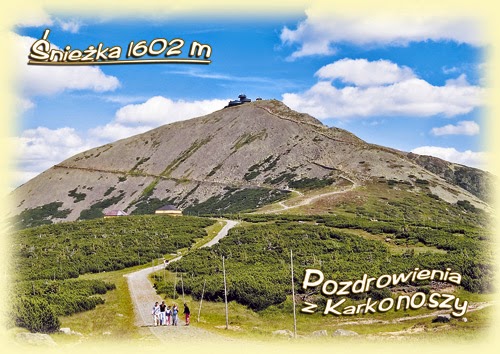
Mountain Śnieżka

Image
Snezka is the highest mountain in the Czech Republic and in the Krkonose mountains (Giant Mountains). It is located at the Czech-Polish border in the Krkonose National Park and rises up to 1602 meters. Krkonose belong to a larger geological system, which reaches to the United Kingdom, where it forms the Snowdonia with its highest summit Snowdon. 250 thousand years ago, during the glacial period, the glacier formed Snezka to a unique shape, unusual for central Europe, which makes Snezka so interesting for geologists, naturalists and tourists. Since 1992, Krkonose are in the UNESCO list of biosphere reserves. The trilateral round pyramid of the Snezka massif falls 600 meters (2000 ft) to Obri Dul (Giant Valley) on Czech south side and to Lomnicky Valley at the north Polish side. The slopes are bare and rocky, formed of gneiss. The trees are only at the foot of the mountain and the vegetation gradually disappears during the ascent, remaining just moss. The eastern slop...