Posts

Showing posts with the label Indonesia

Pontianak, Indonesia

Image
  Kota Pontianak is the capital of the Indonesian province of West Kalimantan, founded by Syarif Abdurrahman Alkadrie as a capital of Sultanate of Kadriyah in 23 Oktober 1771 / 24 Rajab 1181 Hijriah.

Borobudur

Image
This famous Buddhist temple, dating from the 8th and 9th centuries, is located in central Java. It was built in three tiers: a pyramidal base with five concentric square terraces, the trunk of a cone with three circular platforms and, at the top, a monumental stupa. The walls and balustrades are decorated with fine low reliefs, covering a total surface area of 2,500 m2. Around the circular platforms are 72 openwork stupas, each containing a statue of the Buddha. The monument was restored with UNESCO's help in the 1970s.

Indonesia

Image

Edelweiss Seller at Kaliadem - Merapi Vulcano

Image

Surabaya

Image
  Surabaya is a port city on the Indonesian island of Java. A vibrant, sprawling metropolis, it mixes modern skyscrapers with canals and buildings from its Dutch colonial past. It has a thriving Chinatown and an Arab Quarter whose Ampel Mosque dates to the 15th century. he Tugu Pahlawan (Heroes Monument) honors the independence battles waged in Surabaya’s streets in 1945.

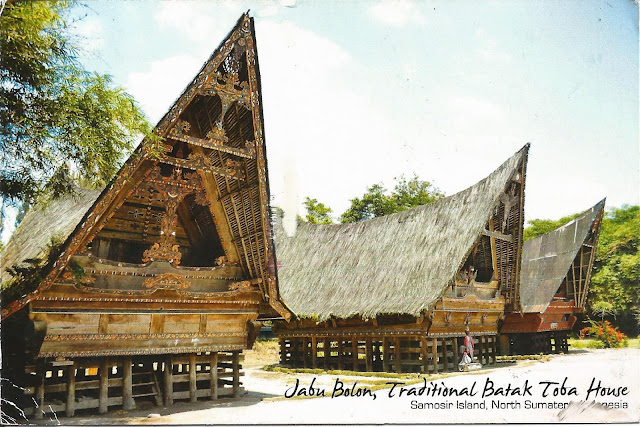
Batak Toba Houses

Image
 The Batak Toba are one of six Batak tribes that inhabit northern and central Sumatra. Each tribe has a distinctive culture and architectural style. Two Batak tribes are Muslim, while the the Toba and another tribe are Christian. The Batak Toba people are concentrated around Lake Toba, the world's largest caldera lake. Their houses are among the most distinctive in Indonesia, with their famous boat-shaped roofs and finely-decorated carvings. The roofs of the Batak Toba houses are formed of sugar palm fiber thatch, held together with rattan cords. However, many houses have abandoned the labor-intensive thatched roof and have converted to zinc metal roofs, which are far more durable in the humid climate.

Legong Dancer

Image
  Legong is one of Balinese dances that characterized by the intricate finger movements, complicated steps, expressive gestures and facial expressions and always did by females dancers. Its delicacy is heightened by the fact that is performed by richly costumed young dancers.   Legong dancers are always girls who have not yet reached puberty. They begin rigorous training at about the age of five. These dancers are regarded highly in the society and usually become wives of royal personages or wealthy merchants.

Floating market

Image
A floating market is a market where goods are sold from boats. Originating in times and places where water transport played an important role in daily life, most floating markets operating today mainly serve as tourist attractions.

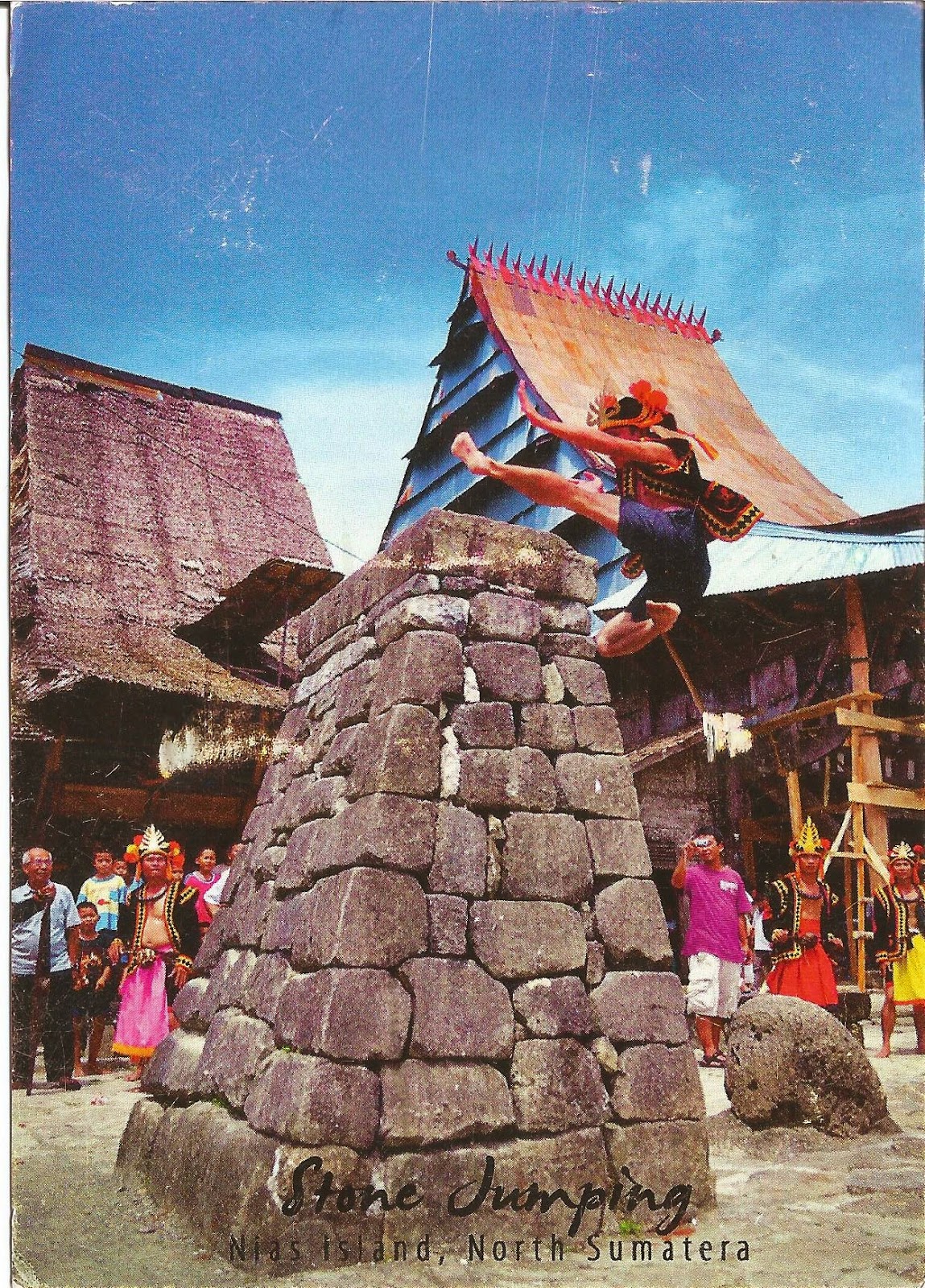
Stone Jumping

Image
 From the age of 7, the boys on the island of Nias practice the ancient art of boulder jumping. As their age increases, so does the height of the boulders they dare defy. For the young men of the Nias tribes, the time would come when they would have to prove their courage and maturity as a warrior through a series of tests. Warriors of Nias must first be strong. Next they must be skilled in martial arts and trained in black magic. The last and final test for the warriors is to leap over massive stones, measuring as high as 2 meters without so much as touching the surface. Stone jumping on Nias Island is referred to as HomboBatu or Fahombo , and is a tradition that has been faithfully practiced and preserved for centuries.