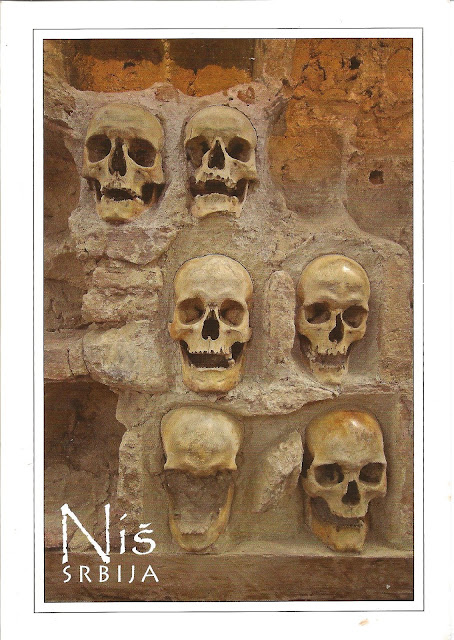
The year was 1809 and the setting was the city of Nis, in the southeast of Serbia. At this point in history, the city was controlled by the Ottoman Empire but patriotic Serbians wanted their land back and there was a strong resistance movement. One fateful day they attacked but were no match for the Ottoman forces. When the leader of the Serbian insurgency realised the battle would be lost, he fired at his gunpowder depot, blowing it up and killing himself, his men and the advancing Turks. It was an honourable sacrifice on the field of battle but what followed showed the morbid side of war at the time. The Turkish commander of Nis ordered that the heads of the killed Serbs be collected. Each head was then skinned and the skulls were built into a tower at the entrance of the city as a warning to anyone else who dared contemplate an attack. As a final insult, the scalps were stuffed and sent back to Constantinople to impress the Sultan. 952 skull...



Comments
Post a Comment