Popular posts from this blog
Leaning Tower of Pisa
Humans make mistakes, after all, no human is perfect. One mistake made in the 11th century resulted in a 14,500 ton leaning tower. This miscalculation would later become a symbol of civic pride, but tell that to the man who designed it! The learning tower of Pisa, known as Torre Pendente di Pisa in Italian, is different than most medieval architecture. This particular section won't cover the highly advanced construction techniques that were used, it is important to mention how this tower's design is significant. The Leaning Tower is the third oldest building on Pisa's Piazza del Duomo (cathedral square), the Cathedral and Baptistry were first. Utilizing many columns and archs, this tower represents an advanced understanding of weight and load characteristics, showing the Italian architectures' knowledge. What the architect didn't account for however, was the base of the tower being built on a dense section of clay. Experts say the fam...
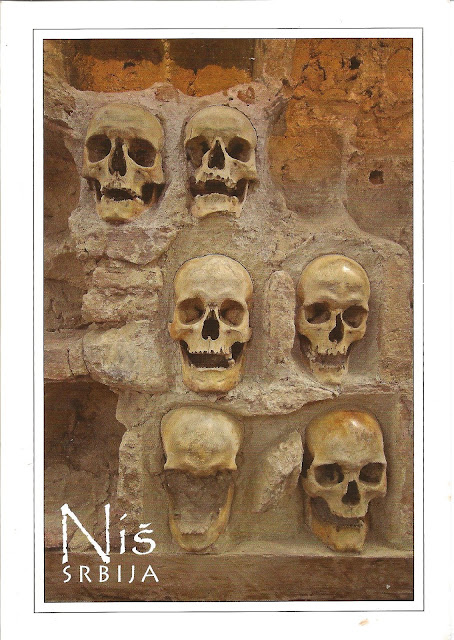
Skull Tower
The year was 1809 and the setting was the city of Nis, in the southeast of Serbia. At this point in history, the city was controlled by the Ottoman Empire but patriotic Serbians wanted their land back and there was a strong resistance movement. One fateful day they attacked but were no match for the Ottoman forces. When the leader of the Serbian insurgency realised the battle would be lost, he fired at his gunpowder depot, blowing it up and killing himself, his men and the advancing Turks. It was an honourable sacrifice on the field of battle but what followed showed the morbid side of war at the time. The Turkish commander of Nis ordered that the heads of the killed Serbs be collected. Each head was then skinned and the skulls were built into a tower at the entrance of the city as a warning to anyone else who dared contemplate an attack. As a final insult, the scalps were stuffed and sent back to Constantinople to impress the Sultan. 952 skull...


Comments
Post a Comment